


Keep your line performing longer
Simple maintenance habits help preserve slickness, flotation, handling, and line life season after season.

How to clean your fly line
Cleaning your fly line helps remove dirt and buildup that can affect shootability, handling, and long-term line life.
Pull the line
Pull the line off your reel into a clean bucket or tub of fresh water.
Apply cleaner
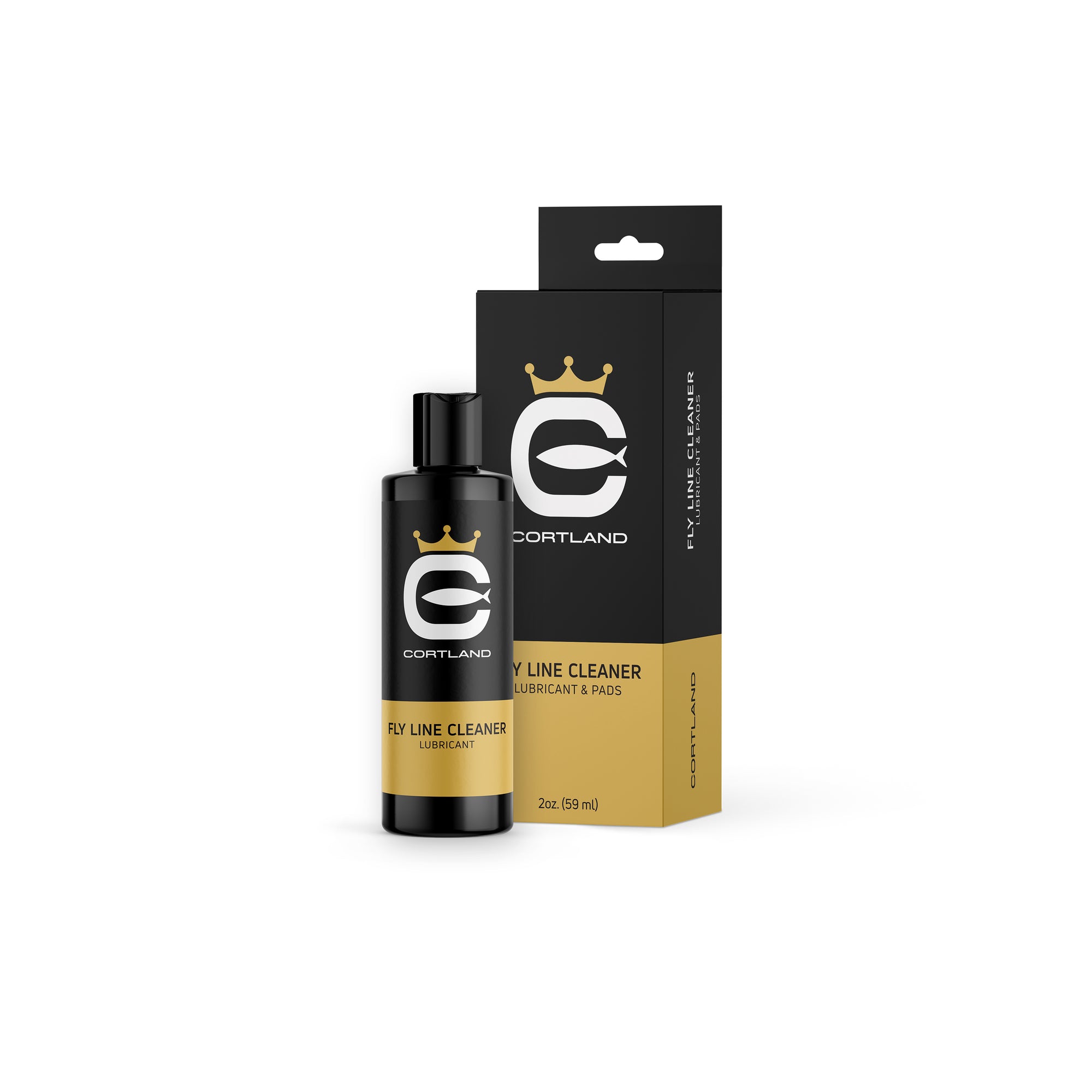
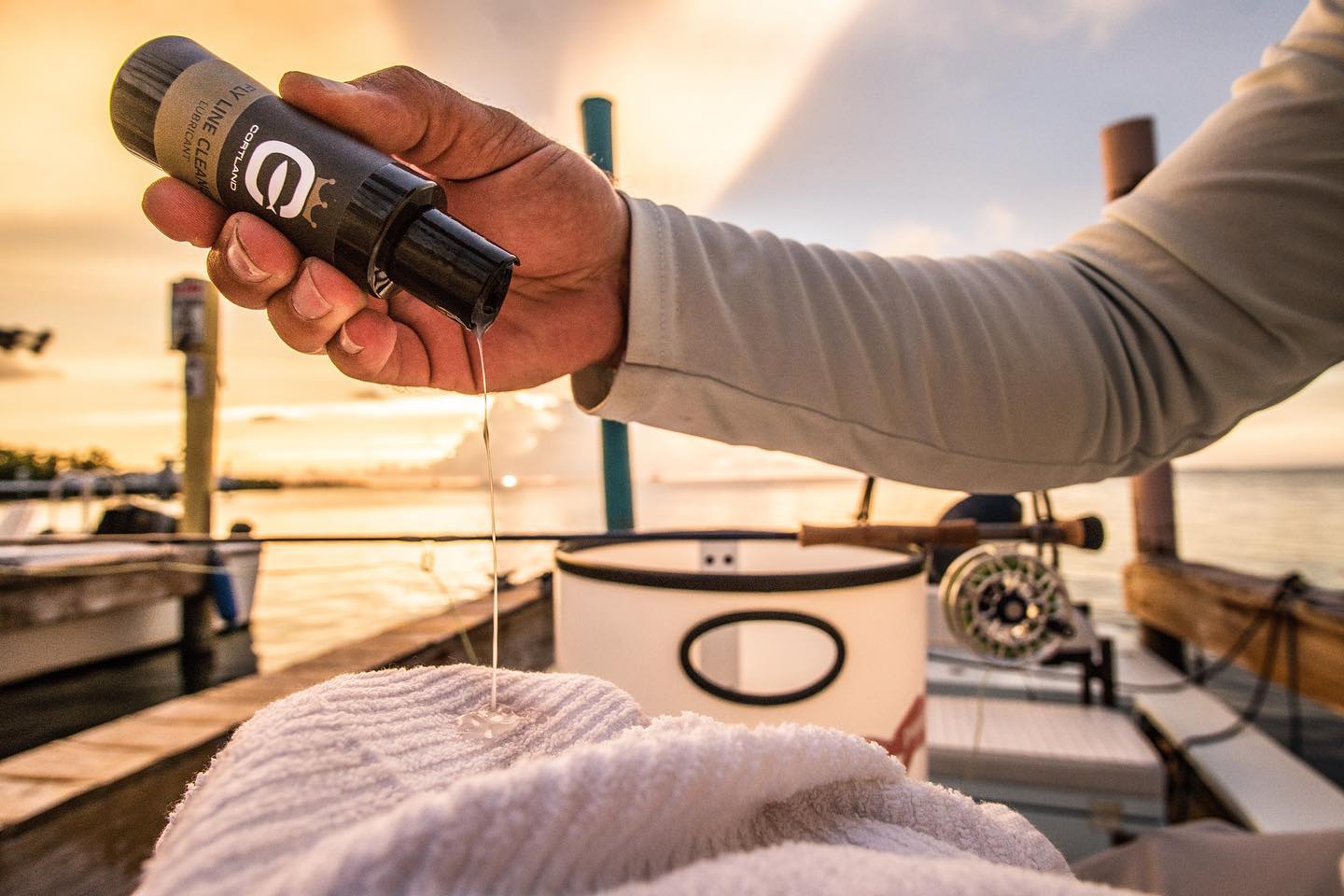
Apply roughly 1 oz. or more of Cortland Line Cleaner solution to a dry pad or towel.
Wrap the line
Wrap the treated pad or towel firmly around the fly line so it contacts the full surface.
Pull slowly
Slowly pull the line through the pad or towel. Dirt or discolored streaks should begin to appear.
Clean fully
Continue working down the line, keeping the towel wrapped around the full line for a complete clean.
Clean your line throughout the season or before storing it for an extended period of time. Regular cleaning helps preserve shootability, handling, and longevity for many outings to come.
Fly Line Care Basics
You do not need to overcomplicate fly line care. Keep it clean, avoid the things that damage coatings, and check the line before it goes back on the reel.
Keep it clean
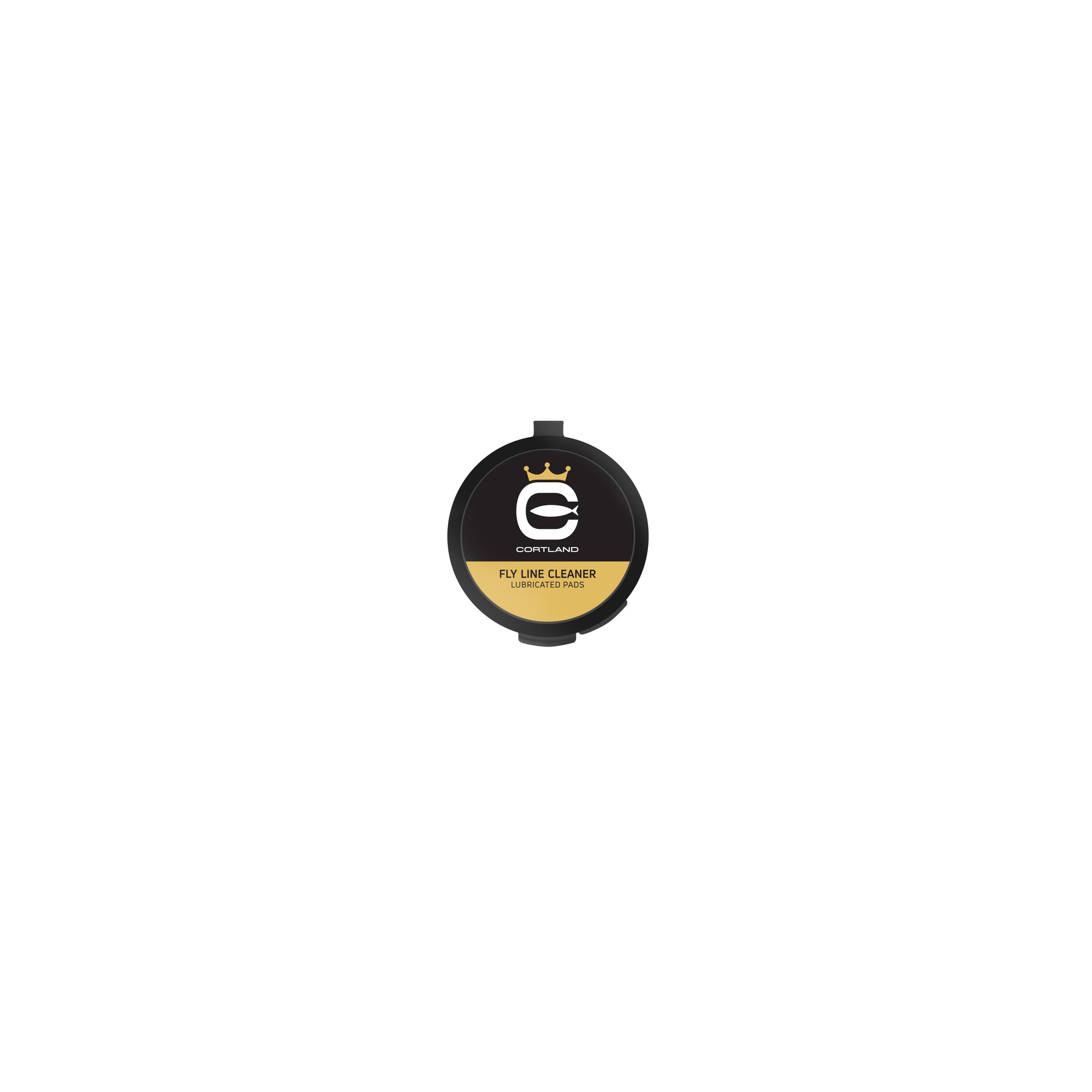
Dirt, grit, and algae can build up on the line surface. Wipe the line regularly with a cleaning pad or soft cloth.
Treat it sparingly
Apply cleaner or treatment lightly, then wipe away excess. Heavy application can attract more grit.
Avoid solvents
Keep fly lines away from DEET, fuel, aerosols, harsh cleaners, and other chemicals that can damage coatings.
Keep it cool
Avoid dashboards, hot trunks, rear window ledges, and direct high heat during storage.
Watch for damage
Look for cuts, cracks, crushing, pinching, or abrasion before the line goes back on the reel.
Stretch it
Before fishing, gently stretch short sections to reduce memory and improve handling.

A few minutes goes a long way
Fly line care is not complicated. The goal is simple: remove dirt and buildup before it affects casting, handling, or line life.
- Quick wipe Use a cleaner pad after regular use or anytime the line starts to feel dirty through the guides.
- Full clean Strip the line into clean water and work down the full length before storage or a new season.
- Re-spool clean Let the line dry, inspect it, then re-spool with light tension so it is ready for the next trip.
When to Clean Your Fly Line
Use a quick wipe after regular use, then do a deeper clean before storage or ahead of a new season.
Quick maintenance
Pull the line off the reel to your normal casting length. Wipe it through a cleaning pad or soft cloth, stretch lightly to remove coils, and re-spool with light tension.
Before storage or a new season
Strip the line into a clean tub or bucket. Pull the full length through a cleaning pad or damp cloth, inspect for abrasion or damage points, stretch lightly, and allow the line to dry before re-spooling.
The cleaner the line goes back on the reel, the better it will handle the next time you fish it.

Keep building the right fly line setup
Fly line care is one part of the system. Use these guides and collections to choose the right line, understand the construction, and keep your setup dialed in.
Use the Line Selector
Answer a few simple questions to get matched with Cortland lines built for your water, species, and fishing style.
Start SelectorUnderstand line construction
Learn how cores, coatings, tapers, finishes, and sink systems affect line performance.
View TechnologiesShop freshwater fly lines
Explore trout, bass, warmwater, euro nymphing, streamer, salmon, and steelhead lines.
Shop FreshwaterShop saltwater fly lines
Find lines built for saltwater species, tropical conditions, cold salt environments, and demanding casts.
Shop Saltwater